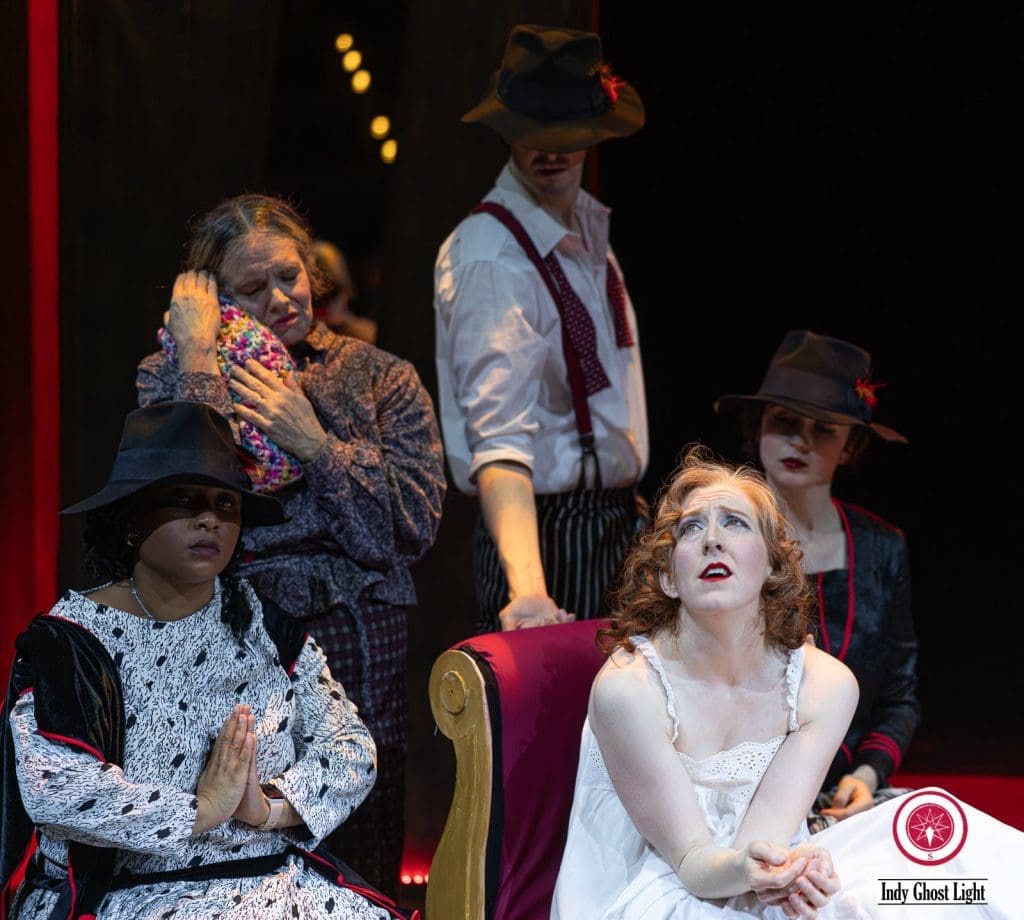

Continuing our commitment to thought-provoking, history-inspired theatre, Southbank presents Sophie Treadwell’s Machinal, first produced in 1928. Machinal touches on the suffocating pressure working-class women face in a capitalist society. The title, from the French word for “mechanical,” points to the soullessness of the industrial, mechanized world. The story is especially moving for any woman who has been forced into compromising situations, especially by rich and powerful men.
In the era of the Epstein files, it’s important to understand why women compromise their well-being, and sometimes their souls, simply to survive. Machinal gives us a glimpse into one woman’s compromised, tragic life.
Creating the world of Machinal
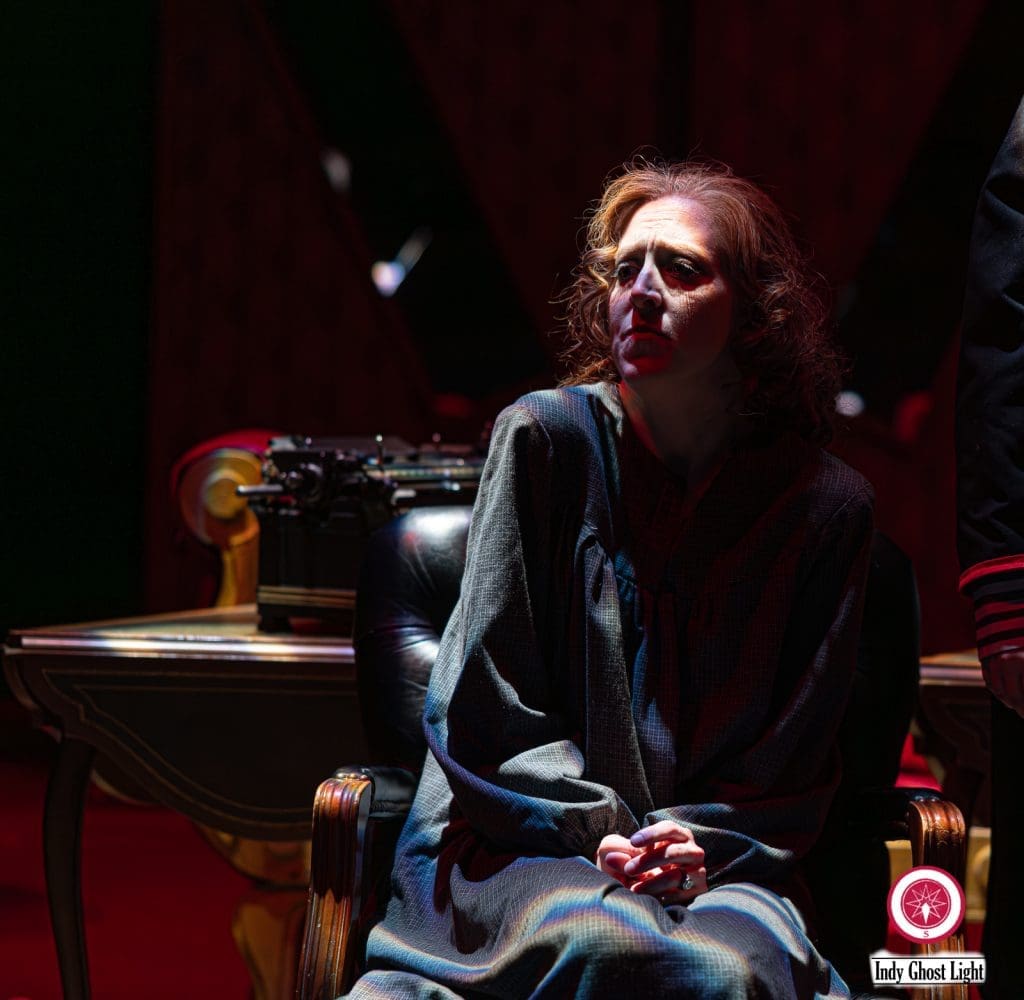
Machinal is famous for its embodiment of dramatic expressionism – intense emotions, symbolism, dreamlike qualities, and strong critique of the government, capitalism, and sexism. We’ve worked hard to emphasize these elements.
Our production starts and ends with Helen’s death in the electric chair. Our concept is that Helen’s life flashes before her eyes as she experiences electrocution, and the rest of the play is the dreamlike moment between life and death, showing us how and why Helen was executed. In keeping with expressionist style, we focused our world building on symbolism and memory. For instance, we didn’t want to have a literal electric chair. Using an office chair as a symbol communicates that Helen’s downfall begins with the sexual harassment she endures at work and the pressure she’s under to marry her boss. When Helen seeks advice from her mother, her mother tells her to eat a potato, but hands her a ring box, symbolizing that her mother cannot provide nourishment – only marrying her boss will keep them from starving.
Another unique innovation in our production is the use of a Greek-style chorus. The chorus torments Helen as she relives the episodes that bring her to her death. I think of the chorus as a physical representation of Helen’s subconscious – the bad angels that tempt her in a variety of ways, all while commenting on the destructive nature of her situation. Their presence also symbolizes that Helen is not alone in making her decisions. Instead, societal forces outside her control influence every move she makes, including killing her husband. The chorus’s participation in the murder broadens the responsibility for Helen’s actions, as if imitating a vicious deed in a bid for freedom is inevitable in a world that makes women financial hostages. Helen’s only regret is that her daughter will face the same cruel world that destroys her without understanding how or why.
While Machinal was based on the true story of a woman, Ruth Synder, who was tried and convicted for killing her husband, our production seeks to make Helen’s story more universal. Our question is: Have we made sustainable progress in women’s agency almost a century after Sophie Treadwell’s signature play? This is a live question. The gains women have made are always under threat, never more so than when they are not heard and they are not believed.
Helen, like women across history, cries out for somebody to understand her, to let her be free. Yet, to the very end, she is required to submit. Her resistance feels futile, but it teaches us a valuable lesson — that we cannot accept meager concessions as proof of real, lasting progress. Instead, we must fight against the machinery of power and money, with the hope to reclaim our destinies. Machinal is just one of many stories that shows us how crucial it is to continue this fight.
Thank you for coming to see this important play. We hope that it moves you as much as it has moved us in creating it. Enjoy the show!